Türkçe


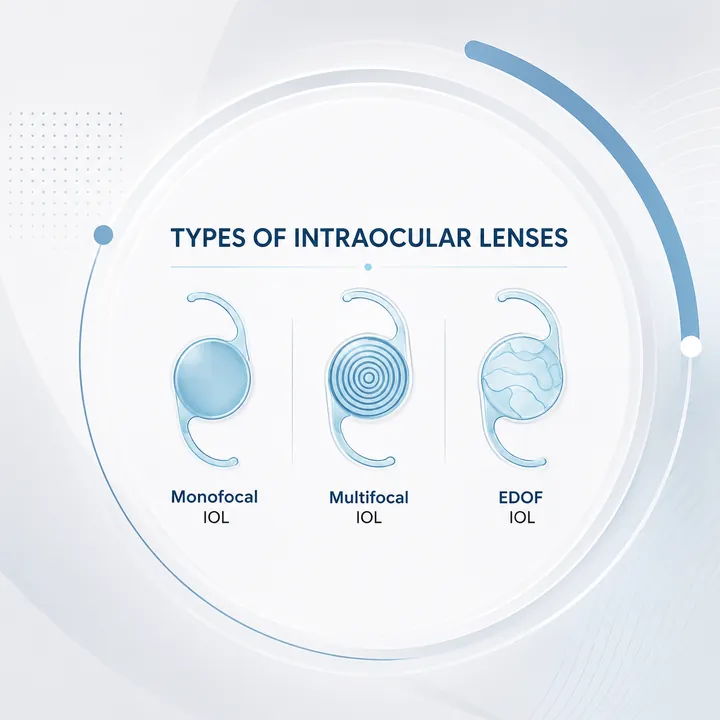
Smart lenses may provide comfortable vision at different distances in suitable patients. However, the approach of “smart lenses for every patient” is not correct. The success of these lenses depends on detailed eye evaluation, correct patient selection and realistic expectations. Some eye diseases may reduce the expected benefit from multifocal, trifocal or EDOF lenses or make complaints more noticeable. Therefore, the entire eye should be evaluated before lens selection.
Why Is Correct Patient Selection Important?
Smart lenses divide or extend light focus to support vision at different distances. Because of this optical structure, they require a healthy cornea, retina and optic nerve for good visual quality. In eyes with underlying problems, these lenses may make existing visual quality issues more apparent. Therefore, monofocal or astigmatism-correcting lens options may be safer and more appropriate for some patients.
In Which Patients May Smart Lenses Not Be Suitable?
Smart lenses may not be suitable in patients with advanced glaucoma, significant visual field loss, macular disease, diabetic macular edema, retinal vascular diseases, keratoconus, irregular astigmatism, severe dry eye or corneal opacity. Previous eye surgeries, high visual expectations and frequent night driving may also affect lens selection.
Smart Lens Selection in Glaucoma Patients
In glaucoma patients, intraocular lens selection requires special attention. Because glaucoma affects the optic nerve, the patient’s visual field, contrast sensitivity and optic nerve reserve should be evaluated. Certain lens options may be discussed in some patients with early and stable glaucoma. However, multifocal lenses may not be suitable in advanced glaucoma, in patients with significant visual field loss or in those with marked optic nerve damage. Therefore, lens decisions in glaucoma patients should be based on a much broader evaluation than eye pressure alone.
Caution in Retinal and Macular Diseases
The macula is the retinal area responsible for central vision. In conditions such as macular disease, diabetic macular edema or retinal vascular disease, postoperative visual quality is not determined by the lens alone. Multifocal lenses may not provide the expected clarity and contrast quality in patients with retinal problems. Therefore, preoperative retinal and macular evaluation is important in patients planned for smart lenses. When necessary, the macula should be examined in detail using imaging methods such as OCT.
Why Are Corneal Structure and Ocular Surface Important?
Corneal structure should also be carefully evaluated during smart lens planning. Irregular astigmatism, keratoconus, previous corneal surgery or advanced dry eye may affect postoperative visual quality. In patients with dry eye disease, the ocular surface may need to be optimized before surgery. Ocular surface problems can affect both the accuracy of measurements and postoperative visual comfort.
Expectation Management in Patients Who Drive at Night
After smart lenses, some patients may experience halos around lights, glare or light scattering, especially at night. This does not occur at the same level in every patient; however, it should be discussed in detail before surgery in patients who drive at night, have high contrast sensitivity needs or are very sensitive about visual quality. For this reason, smart lens planning should consider not only examination findings, but also the patient’s occupation and daily lifestyle habits.
How Is Smart Lens Suitability Evaluated?
Smart lens suitability is evaluated through a detailed eye examination. In this process, intraocular pressure, optic nerve, corneal structure, degree of astigmatism, retina and macula, biometry measurements and ocular surface are assessed together. The patient’s expectations should also be evaluated. Near, intermediate and distance visual needs, computer use, reading habits, night driving and expectations regarding glasses are considered in lens selection.
Conclusion
Smart lenses may be a good option in suitable patients, but they are not the right choice for every patient. Correct patient selection and detailed preoperative evaluation are the most important steps for a successful outcome. In patients with glaucoma, retinal disease, corneal irregularity, advanced dry eye or optic nerve problems, lens selection should be made more carefully. The goal is not only to reduce the need for glasses, but to create a safe and realistic visual plan appropriate for the patient’s eye structure. This content is intended for general informational purposes only. Smart lens suitability, diagnosis and treatment decisions should be determined after detailed eye examination, evaluation of the patient’s clinical status and assessment of the necessary tests.